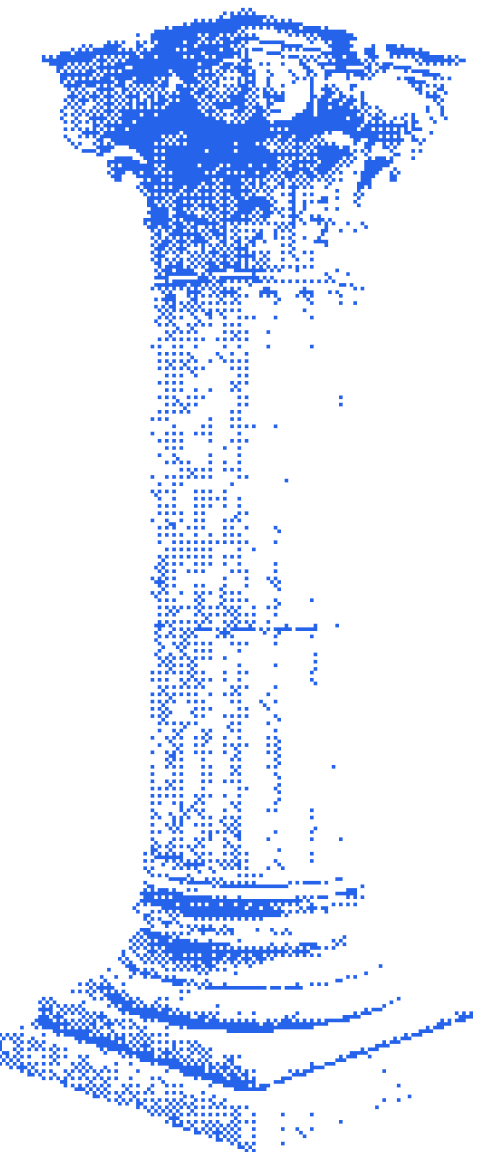
Before Gutenberg’s printing press, knowledge moved slowly.
Books were copied by hand, mostly by monks. Painstaking work. Months for a single manuscript. Knowledge wasn’t just scarce ; it was controlled. If you weren’t part of the right institution, you didn’t get to participate. Not because you lacked ideas, but because access itself was gated.
Then the printing press arrived.
It didn’t make monks faster at copying books. It made copying books irrelevant.
And almost as a side effect, it rewired how humans shared ideas. The Renaissance followed ; not because of cheaper books, but because thinking scaled.
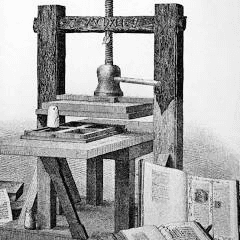
(OG Printing Press)
I’ve started to think test automation is hitting a similar moment.
For most of its history, test automation has been about transcription.
We told machines exactly what to do: Click here. Wait there. Assert this text. Hope nothing moves.
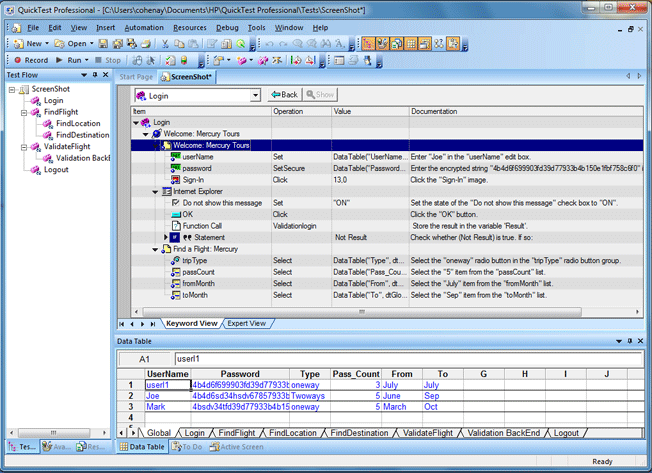
(Screenshot from QTP - One of the oldest test automation tools)
In the early days, that was revolutionary. Tools like WinRunner, QTP, and later Selenium freed testers from endless manual repetition. Automation meant speed.
But it also created a new priesthood.
Frameworks became doctrine. Locators became scripture. Only a few people “knew the framework,” and everyone else tiptoed around it.
Automation existed ; but testing didn’t really scale.
As the years went on, the industry doubled down.
Better frameworks. Better abstractions. Page Objects. BDD. Codeless tools. Low-code tools.
The global test automation market ballooned into the tens of billions of dollars. And yet, almost every team still complained about the same things:
brittle tests
high maintenance
low trust in results
slow feedback when it mattered most
Somewhere along the way, automation became very good at executing instructions ; and very bad at understanding intent. Well that should have been a warning sign.
What’s changed recently isn’t just better tooling. It’s a different mental model.
For the first time, we’re moving away from telling machines how to test, and toward telling them what we care about.
Instead of scripting steps, we describe outcomes. Instead of hardcoding paths, we describe behaviors. Instead of babysitting locators, we talk about flows, risks, and users doing unexpected things.
Agents can now:
see interfaces
navigate applications like humans
adapt when the UI shifts
recover when something doesn’t go as planned
This isn’t “AI writing Selenium faster.” That’s missing the point. This is automation crossing a threshold ; from execution to reasoning. You can literally write a test case like :

(5 line end to end automated test on TestZeus)
Now isnt that the smallest Salesforce test case you have seen?
And this is where the Gutenberg analogy really starts to matter.
The printing press didn’t reduce the cost of writing. It reduced the cost of sharing intent.
Agentic testing is doing something similar. Execution is no longer expensive. Spinning up tests doesn’t take weeks. Running complex flows doesn’t require deep plumbing.
Which means the bottleneck has moved.
The hardest question is no longer:
“Can we automate this?”
It’s now:
“What is worth testing?” “What risk actually matters?” “How would a real user break this?”
Those are not framework problems. They’re thinking problems.
This shift is uncomfortable. Because for years, automation work could hide behind complexity. Now that complexity is dissolving. When machines can execute intent, humans are responsible for having good intent.
You can generate a thousand tests today. And still miss the one failure that takes your system down.
In an agentic world, productivity is table stakes. Judgment is the differentiator.
The Renaissance didn’t produce more scribes. It produced scientists, philosophers, explorers.
Agentic testing won’t produce more scripts. It will produce better testers ;or expose the lack of them.
We’re moving from:
scripts → intent
coverage → confidence
tools → judgment
Not someday. Not five years from now..
The printing press was ready long before society realized what it unlocked.
Test automation feels the same today.
The tools are here. The agents are working. The execution problem is largely solved.
The real question is whether we’re ready to stop copying manuscripts ; and start thinking again.
That’s the Gutenberg moment of test automation.
NetApp had its own Gutenberg moment when it replaced legacy Selenium scripts with TestZeus.
// Start testing //